

Computational Histories
-
Details
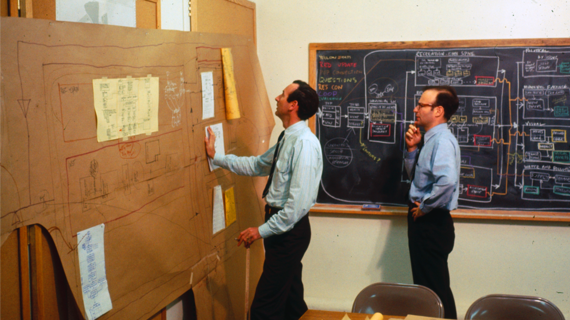
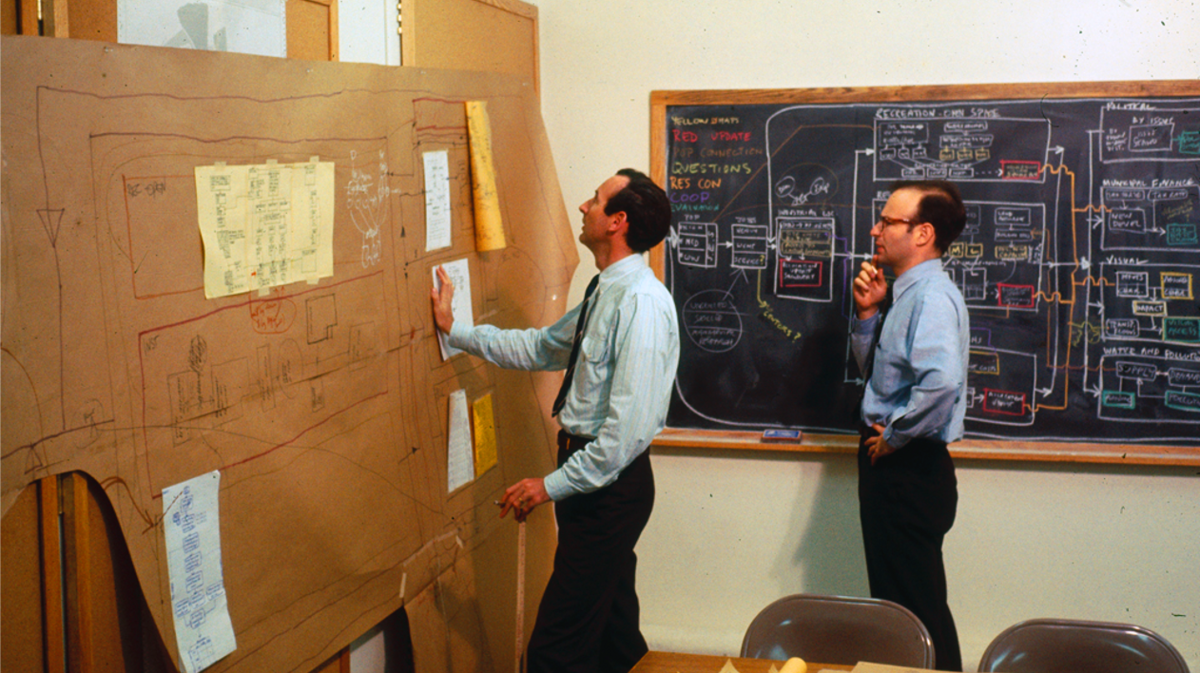
How can digital technologies and practices be located historically, and what are the cultural, material, political and social dimensions that are associated with them? The projects analysed here focus on developments since the post-war period, are dedicated to the integration of computers into planning and design processes, and are interested in the different actors involved in the development of a changing understanding of planning at different scales. The promises and utopias associated with exploring computer-based approaches and trial-and-error procedures are also examined.
Writing the History of the Computer Visualizations in the Sciences: Production, Uses, Circulation (1940-1990)
Grayson Bailey, Nathalie Bredella
2.-3. May 2024 @ Écoles des Hautes Études en Sciences Sociales
View ProgramIs That a Computer Program? Carl Steinitz on the Early Years of Harvard’s Laboratory of Computer Graphics and Spatial Analysis
Grayson Bailey, Nathalie Bredella
Dimensions Journal of Architectural Knowledge
November 2024Computing practices, data-based design, and knowledge cultures during the post-war period
Nathalie Bredella
Meson Press
2024



Feminism and Digital Cultures
-
Details
The research project examines methods of feminist practice in their significance for digital cultures. The interdisciplinary focus group brings together the chairs of Theory and History of Architecture, Art and Design, Architectural Informatics, Urbanism, Building Technology and Climate Responsive Design, Digital Fabrication and the Chair of History of Architecture and Curatorial Practice to investigate the protagonists of digital practices, their knowledge cultures and their social, economic and political contexts. Historical and contemporary methods, events and practices that have not yet been considered in the history of architecture will be analysed. Research and teaching are in dialogue within the project. Methods include oral history, re-enactments, archival work and exhibitions that explore and communicate the results to the public.
Fabricating Archaeologies: Feminist Craft, Human Hands and Intelligent Architectures
Nathalie Bredella, Andrea Reichenberger (TUM), Rudolf Seising (TUM)
3.-4. July 2024 @ TUM IAS
View ProgramPrepared Instruments and Craft Genealogies
Grayson Bailey, Nathalie Bredella, Jonah Marrs
7. June 2024 @ TUM Pavilion 333
Visit ProgramLink It and Move It Youth Workshop
Grayson Bailey, Nathalie Bredella, Jonah Marrs
12. Oct 2024 @ Deutsches Museum
Visit ProgramAgentive Matter(s) Workshop
Nathalie Bredella, Anna Keune (TUM)
22. Nov 2024 @ TUM IAS
Visit Program
Protocols of Control
-
Details
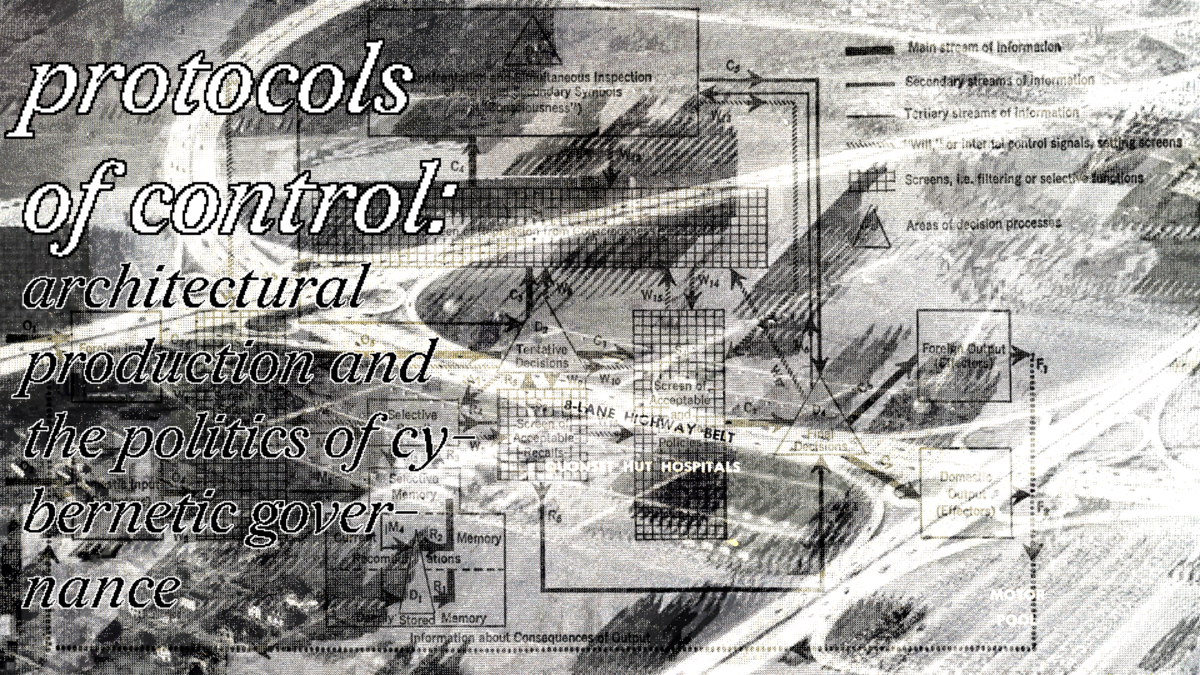
Communication and Complexity in Architecture: cybernetics as governmental paradigm
Grayson Bailey
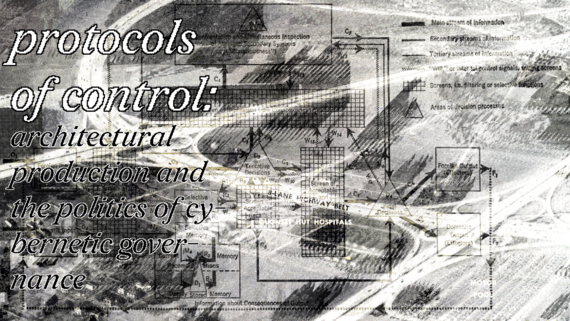
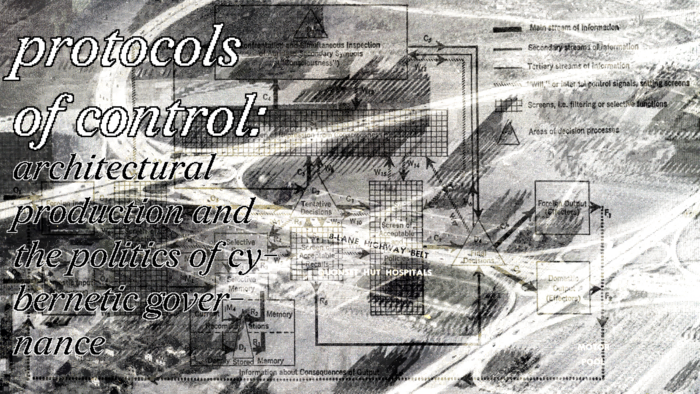
Doctoral ResearchThe following doctoral proposal examines the influence of Cybernetics as a “governmental paradigm” on contemporary architectural discourse. As a discipline of systems theory, Cybernetics has had a transformative influence in Architecture, especially in its transition from technical theories during the Post-War period to an increasingly integrated network of political logics. Cybernetics-as-governmental-paradigm refers to the ideological manner in which Cybernetics has informed political and discursive conditions in the past century. Architectural discourses which address the themes of “Ecology”, “Network”, “Sustainability”, and “Participation” have largely internalized core concepts from Cybernetics, such as “System”, “Protocol”, “Equilibrium”, and “Feedback”. However, uncritical invocations of these concepts in Architecture ignore a fundamentally ideological dimension, on whose distributed effects must first be recognized before any potential reappraisals of architectural political realities can take place.
In the disciplines of political, media, gender and cultural theory, the role of cybernetics-as-governmental-paradigm has been a nuanced topic of research since the 1980s. However, architectural reflection on the ongoing influence of cybernetics-as-governmental-paradigm remains limited, with analysis of new political conditions largely dividing itself between network-utopianisms or entrenched 20th century critical frameworks.
This project involves the comparative analysis of architectural and cybernetic discourses with a focus on the contested manners in which Architecture engages interconnected themes: Ecology / System, Network / Protocol, Sustainability / Equilibrium, Participation / Feedback. Case studies related to each thematic set (exemplary events, practices, objects) will also be used to additionally reflect on the architectural conditions of cybernetics-as-governmental-paradigm. Finally, a synthesis of discourses will be used to situate architectural production in the contemporary political landscape and to establish new political affordances.
ArchTHEO 24 International Conference on Theory and History of Architecture
Grayson Bailey
15. Nov 2024 @ DAKAM InstanbulCritic/all V International Conference on Architecture Design & Criticism
Grayson Bailey
10-11 Oct 2023 @ TU Delft
Visit Program